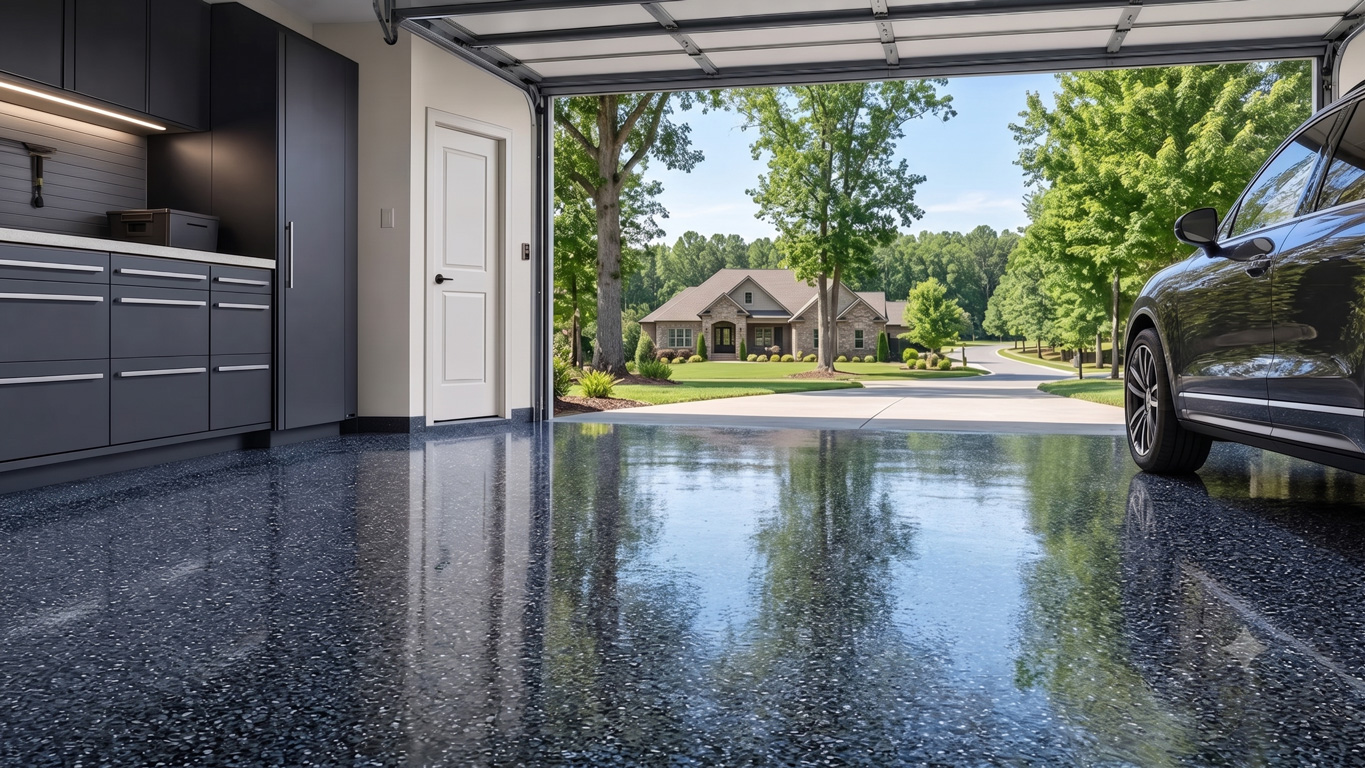
Garage Floor Coating in Ballantyne, NC
Floor Coating Services in Ballantyne, NC
Ballantyne is a later-era South Charlotte development area rather than an older industrial town. The district began transforming from farmland in the 1990s into a master-planned mixed-use community, and Charlotte rezoning records referenced formal Ballantyne development standards by 1999. Garage-floor questions therefore often concern younger concrete: builder-applied sealers, curing compounds, dense finishes, control joints and any coating added after move-in, rather than decades of historic repairs.
Development has continued around the established neighborhoods. The corporate core is being reshaped with new roads, parks, retail, apartments and townhomes, while surrounding subdivisions contain attached garages from different construction phases. Garage size, steps, cabinetry and household use can change the project even where slab ages are similar. New-looking concrete can require extensive preparation before a coating will bond reliably.
Drainage and sun exposure add separate decisions. Properties around I-485, Johnston Road, Community House Road and Ballantyne Commons Parkway can have different driveway approaches and grades. At the door, water runoff and direct sun can affect preparation, topcoat choice and daily use. A coating recommendation should follow the slab's condition, actual threshold drainage and garage configuration, not merely the area's modern development reputation.
Local Market Insight
Ballantyne's 1990s-and-later master-planned growth creates a younger garage stock than Charlotte's intown neighborhoods. The project emphasis shifts toward surface treatments, joint and crack condition, heavy household use, and modern subdivision drainage.
What Affects the Cost of Garage Floor Coating in Ballantyne?
In Ballantyne, the dominant cost questions are usually tied to relatively modern attached-garage construction rather than century-old slab history. Surface treatments, smooth machine finishes, control joints, built-in storage, multi-car layouts, driveway drainage, direct sun at the door, and tight household scheduling can all change preparation and system choice.
Later-era concrete
Many Ballantyne garages have relatively modern slabs that may need less structural repair but still require sealers, curing compounds, or dense finishes to be mechanically removed.
Prior homeowner coatings
A garage that has already been painted or coated may require full removal if the old layer is weak or incompatible.
Control joints and cracks
Modern attached garages often contain control joints, small shrinkage cracks, or builder patching that should be evaluated before coating.
Daily household entry
Many Ballantyne garages function as primary entrances, storage areas, and family utility spaces, making cleanability and practical traction important.
Sun at the door line
Open south- or west-facing doors can expose the first portion of the floor to strong sunlight, making topcoat choice more relevant.
Multi-bay layouts and built-ins
Three-car garages, steps, cabinets, stem walls, and storage alcoves add detail work beyond the open slab.
Call for a clear, project-specific estimate — or request one online.
Ballantyne's master-planned origin changes the likely preparation problem
Ballantyne grew from farmland into a major mixed-use community beginning in the 1990s, so the surrounding residential garage stock is much younger than Charlotte's streetcar-era neighborhoods.
That generally shifts the inspection away from century-old additions and toward modern concrete questions: builder sealers, curing compounds, smooth finishes, control joints, and whatever coatings the homeowner added later.
A newer slab can still fail if coated without proper mechanical preparation. Age is not a substitute for surface profiling.
Ballantyne's development history is unusually modern and planned. Charlotte rezoning records from 1999 already referred to formal 'Standards for the Development of Ballantyne,' which helps explain why the area's garage stock is dominated by later attached construction rather than the patchwork of century-old accessory buildings found in older Charlotte neighborhoods.
Ballantyne is still changing around established neighborhoods
The corporate core is being redeveloped with new roads, parks, retail, apartments, and townhomes, while established residential neighborhoods remain around it.
For a homeowner, that ongoing change does not dictate a coating system, but it reinforces how varied the area's garage layouts and property drainage can be despite the shared Ballantyne name.
The useful questions remain property-specific: what is on the slab, how does water reach the door, and how is the garage actually used?
The area is still evolving. Charlotte's South Charlotte Reinvestment Program includes improvements at Ballantyne Commons Parkway intersections, and long-range transit planning preserves a future Blue Line extension toward Ballantyne. Those investments are not coating factors by themselves, but they reinforce the area's continuing growth and redevelopment—useful context for why slab age, subdivision construction practices, and daily-use scheduling dominate more than historic-floor restoration.
That newer-development profile also changes what 'wear' looks like. A Ballantyne garage may have little historic damage yet still need careful attention to smooth concrete, tire paths, builder-applied products, house-entry steps, cabinetry, and the first several feet of slab exposed to sun and rain whenever the door is open.
Before coating a Ballantyne garage
- Is there clear sealer, paint, epoxy, or another existing surface treatment?
- Are control joints, cracks, or builder patches visible?
- Does the garage have two bays, three bays, or storage extensions?
- How much direct sun reaches the floor near the door?
- Does the driveway slope toward the garage?
- Is the garage a primary household entry?
- How quickly must vehicles return after coating?
Ballantyne Garage Floor Coating FAQs
Are Ballantyne garage slabs generally newer than intown Charlotte slabs?
Ballantyne's major development began in the 1990s, so many residential garages are later-era construction. The actual slab and any later coatings still need to be inspected individually.
Does a modern slab still need diamond grinding?
Yes. Mechanical preparation creates the surface profile the coating needs and removes sealers, curing compounds, or weak surface material.
Should I worry about small control-joint cracks?
They should be evaluated, but small cracks are common. The installer should explain which joints will be filled, repaired, or left to move as designed.
Is decorative flake useful for a busy family garage?
Yes. It adds visual texture, can help disguise ordinary dirt, and can be paired with traction suited to wet shoes and frequent household use.
Why is Ballantyne usually a newer-slab preparation market?
Charlotte records show formal Ballantyne development standards were already in place by 1999, and the area continued to grow as a planned South Charlotte district. That makes curing products, smooth finishes, joints, attached-garage details, and household scheduling more common concerns than century-old slab restoration.
Ballantyne Neighborhoods & Local Context
Phone Quote Line
Speak with a floor coating specialist about your project and get a realistic estimate range.
(803) 656-1547Typical Project Cost
$3,000–$5,500
Typical range for a two-car garage. Final pricing depends on floor size, concrete condition, prep work, coating type, and finish options.
Helpful Guides
Other Service Areas