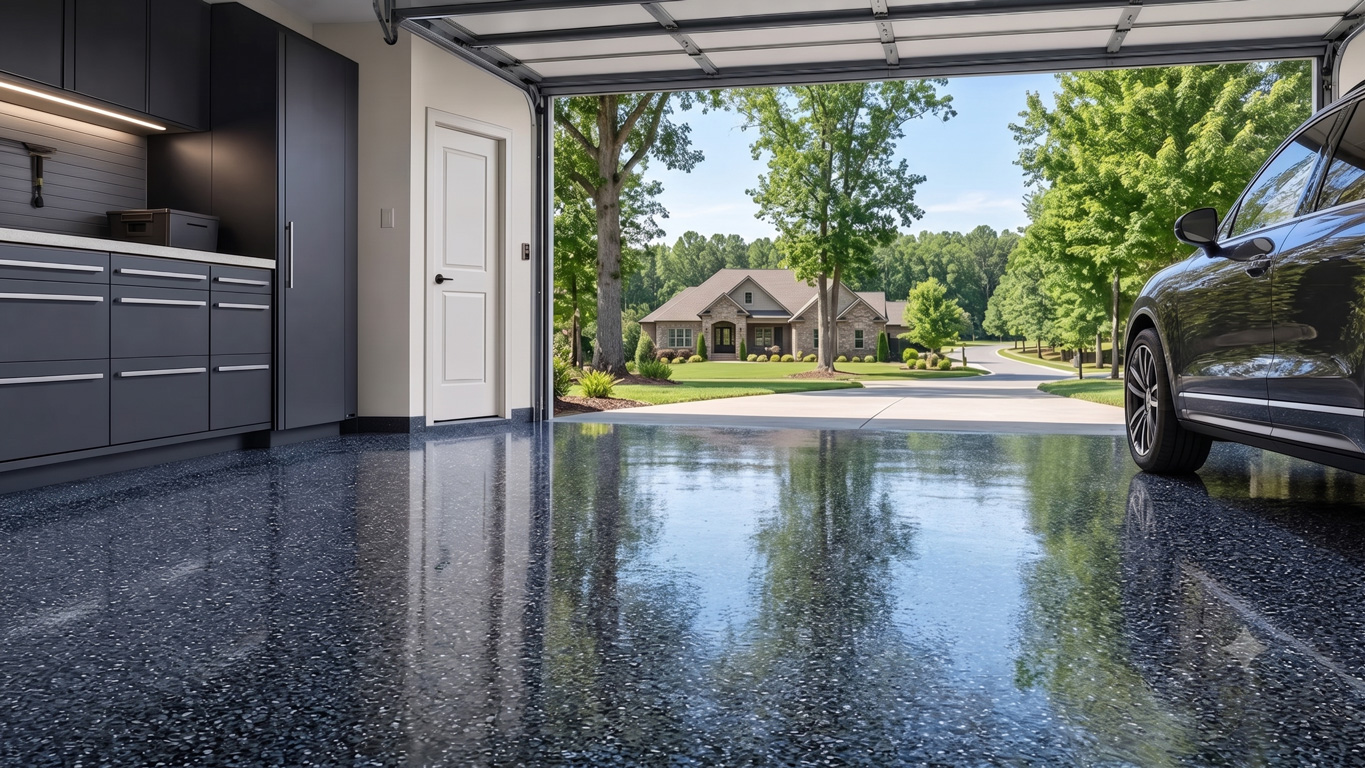
Garage Floor Coating in Fort Mill, SC
Floor Coating Services in Fort Mill, SC
Fort Mill combines its historic textile-era core with very recent suburban development. The town was established in 1873, the Fort Mill Manufacturing Company opened in 1887, and downtown still contains buildings dating to the 1800s. Garages on established properties may have been added or repoured long after the home, leaving paint, old patches, earlier coatings or multiple concrete pours. The address alone cannot establish what preparation is needed.
Recent population growth makes the newer side of the market just as important. Fort Mill grew from 24,521 residents in the 2020 Census to an estimated 38,673 in 2025. Young subdivision slabs now sit near much older neighborhoods, but newer concrete is not automatically coating-ready. Curing compounds, sealers, dense finishes and control joints can require substantial mechanical preparation even with little visible wear.
Water management is a separate consideration. Fort Mill maintains a stormwater program addressing the effects of urban development on local waterways as new roofs, roads and driveways change runoff. At garage scale, the questions are whether the driveway slopes toward the door, water collects on the apron or the slab stays damp after storms. A coating may improve cleanup, but active exterior drainage should be addressed instead of concealed beneath a new finish.
Local Market Insight
Fort Mill's old textile-era core and very rapid recent growth create a genuine old-slab/new-slab split. The best project plan distinguishes historic repair history from newer-construction surface treatments and checks drainage separately.
What Affects the Cost of Garage Floor Coating in Fort Mill?
In Fort Mill, the biggest cost differences often come from the split between older town properties and rapid-growth subdivision construction. An older floor may add paint removal, repairs, or mixed concrete, while a newer slab may add curing-product removal, dense surface profiling, drainage work, multi-bay detail, or a faster return-to-service requirement.
Historic and textile-era property history
Older Fort Mill properties may have garages or outbuildings added well after the house. Different pours, old paint, patches, and previous coatings can increase preparation.
Fast-growth newer construction
Newer subdivision slabs may have fewer cracks but can still carry curing compounds, sealers, or dense finishes that must be removed before coating.
Stormwater and driveway runoff
As development adds more impervious surface, the path water takes across a particular lot matters. Repeated runoff at the garage threshold should be understood before coating.
Cracks and repair history
Older slabs can contain stable repairs, utility cuts, spalled edges, or patched transitions that need correction before grinding.
Multi-bay and storage-heavy garages
Larger modern garages, steps, stem walls, storage alcoves, and built-ins add detail work beyond the open floor area.
Finish and cure schedule
Decorative flake, traction, topcoat type, and how quickly vehicles must return can change the material system and labor.
Call for a clear, project-specific estimate — or request one online.
Fort Mill's 1800s core and 2020s growth produce very different garage floors
Fort Mill's commercial and residential roots reach back to the railroad and textile era, while recent population growth has added large amounts of new housing in a short period. Those two development waves create different preparation problems.
An older floor may need paint, sealer, oil contamination, and prior repairs removed. A newer floor may need curing compounds or a dense surface mechanically opened even when there are few visible defects.
The age of the neighborhood is useful context, but the concrete itself should determine the preparation.
Fort Mill's growth is unusually fast even by Charlotte-metro standards. Census data shows 24,521 residents in 2020 and an estimated 38,673 in 2025, an increase of about 58 percent in five years. That pace means many garages are genuinely young, but it also means builders, subdivisions, surface treatments, drainage systems, and construction eras can differ sharply across a small area.
Rapid growth makes runoff worth checking at the property level
Fort Mill's recent growth has added roads, roofs, driveways, and other hard surfaces that move rainfall differently than undeveloped ground. The town's stormwater program specifically focuses on reducing the effects of urban development on waterways.
At a garage, the practical version of that issue is simple: does the driveway send water toward the door, does the apron hold water, or does one part of the slab stay damp longer than the rest?
A coating can improve cleanup and finish the surface, but recurring exterior water should be corrected rather than hidden.
The older side of the market is just as real. Fort Mill was established in 1873, the Fort Mill Manufacturing Company opened in 1887, and downtown still contains buildings dating to the 1800s. A garage on an established property may therefore have been added, repoured, painted, or converted long after the original house, making slab history more useful than address age alone.
Before coating a Fort Mill garage
- Is the property in an older town neighborhood or newer subdivision?
- Is the floor bare, painted, sealed, or previously coated?
- Do different pours or construction joints suggest additions or repours?
- Are cracks, patches, pitting, or chipped edges present?
- Does rainwater move toward the garage threshold?
- Are there damp areas, mineral deposits, or previous coating failures?
- How quickly must vehicles and storage return after installation?
Fort Mill Garage Floor Coating FAQs
Does a historic Fort Mill address mean the garage concrete is too old to coat?
No. Sound older concrete can coat very well. The important questions are what has been applied to it, whether repairs are stable, and how the surface will be mechanically prepared.
Is a newer Fort Mill garage automatically coating-ready?
No. Newer slabs still need adequate curing and mechanical preparation, and any sealer or curing compound must be addressed.
Why does stormwater matter to a garage floor?
If runoff repeatedly reaches the threshold or the slab stays damp, that can affect project planning. A coating is a finished surface, not a drainage repair.
What should I compare between Fort Mill coating quotes?
Compare preparation method, crack and repair scope, coating chemistry, layer count, traction, topcoat, cure time, and exactly what is included.
What does Fort Mill's recent population growth change for garage-floor projects?
The town grew from 24,521 residents in 2020 to an estimated 38,673 in 2025, so many garages are genuinely newer. That shifts some projects away from old-paint removal and toward curing products, smooth finishes, control joints, drainage, and subdivision-specific construction details.
Fort Mill Neighborhoods & Local Context
Phone Quote Line
Speak with a floor coating specialist about your project and get a realistic estimate range.
(803) 656-1547Typical Project Cost
$3,000–$5,500
Typical range for a two-car garage. Final pricing depends on floor size, concrete condition, prep work, coating type, and finish options.
Helpful Guides
Other Service Areas